A scattered history assembled
Schipke, Limper and Tetzlaff synthesize 85 records documenting more than 244 cases over roughly 75 years. The record stretches from Taravana among Polynesian pearl divers to Japanese Ama, Korean Haenyeo, spearfishers, instructors and recreational freedivers. The review argues that decompression sickness (DCS) is uncommon but real in breath-hold diving, especially after repetitive profiles and at substantial depth. Unlike the more familiar joint-pain image from compressed-gas diving, reported breath-hold cases are predominantly cerebral and can resemble a stroke or transient ischaemic attack.
How breath-hold exposure can accumulate
A single breath does not eliminate nitrogen physics. Repetitive shallow dives with short surface intervals can progressively load tissue; very deep dives expose the body to large pressure changes; rapid ascent changes gas tension quickly. The review identifies inadequate surface intervals, repetitive work, dives beyond 40 metres, fast ascent and individual factors such as a patent foramen ovale as recurring associations. Mechanisms remain debated: venous bubbles, right-to-left passage, pulmonary shunts recruited during hypoxia and growth of arterialized gas nuclei may contribute in different profiles.
Cases reveal possibility, not incidence
The review's scale is compelling, but its denominator is missing. Case reports are selected because something happened; they cannot tell us how often DCS occurs per dive, define a universally safe depth, or prove that any listed factor is causal. Historic records use changing terminology and diagnostic standards; profiles are often reconstructed after the event; mild cases are likely missed while dramatic cases are preferentially published. Patent foramen ovale is common in the population, so its presence in a case does not by itself establish mechanism. The thresholds in the review should therefore be read as warning patterns, not decompression tables.
Recognition is the immediate lesson
New weakness, numbness, visual disturbance, confusion, speech difficulty, severe imbalance or other neurological change after breath-hold diving deserves emergency assessment, even in a young fit diver and even without a tank. The review emphasizes high-flow oxygen and urgent hyperbaric evaluation as treatment priorities; local emergency and diving-medicine protocols govern the response. For education, the durable message is to avoid compressing repetitive work into ever-shorter surface intervals and to treat neurological symptoms as time-critical—not to self-diagnose or return to the water because the dive was “only” breath-hold.
Safety note: This is educational analysis, not individualized medical advice or a maximal-training protocol. In-water practice requires trained safety and current standards.
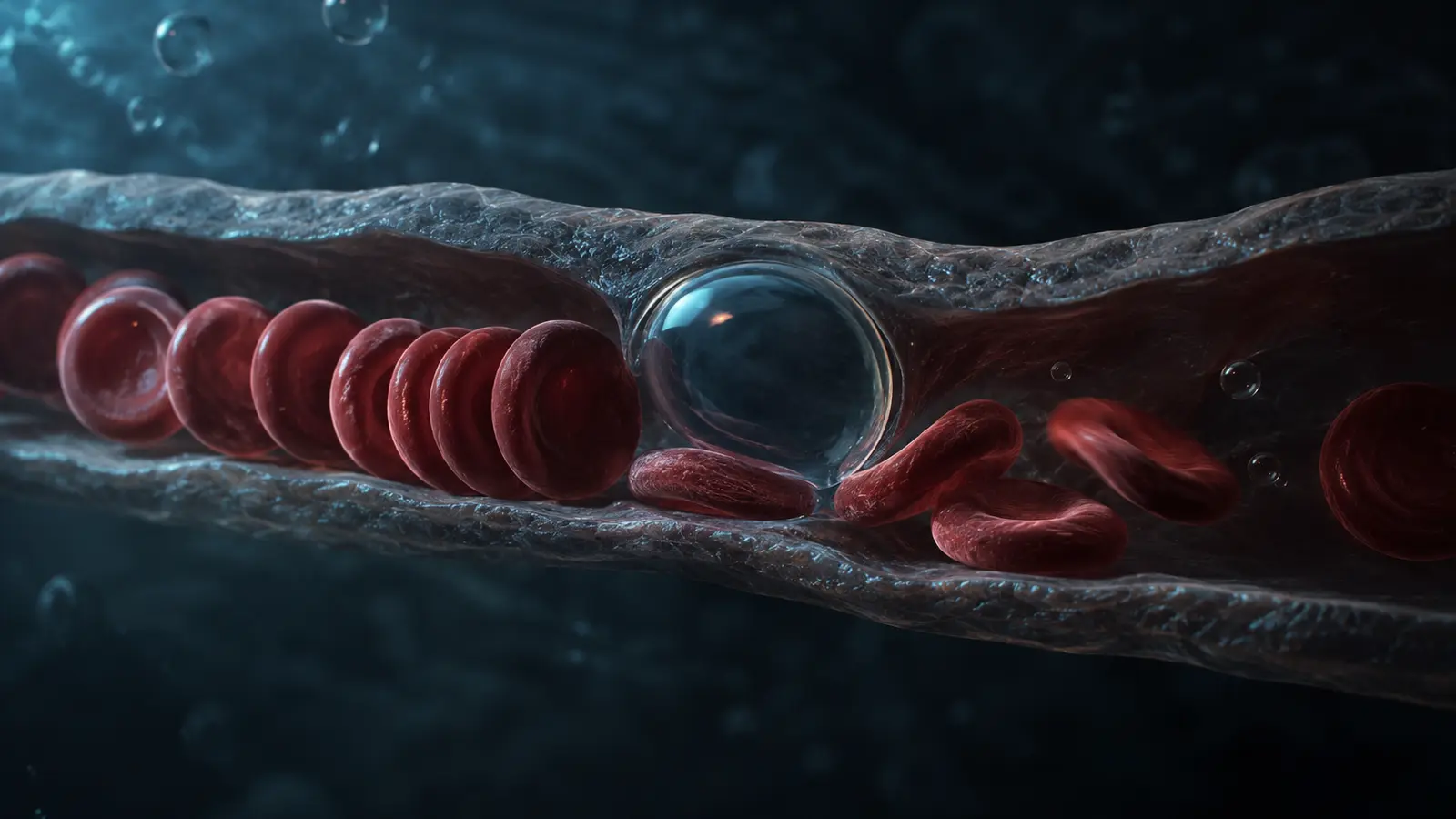
Original conceptual scientific illustration created for this Journal.