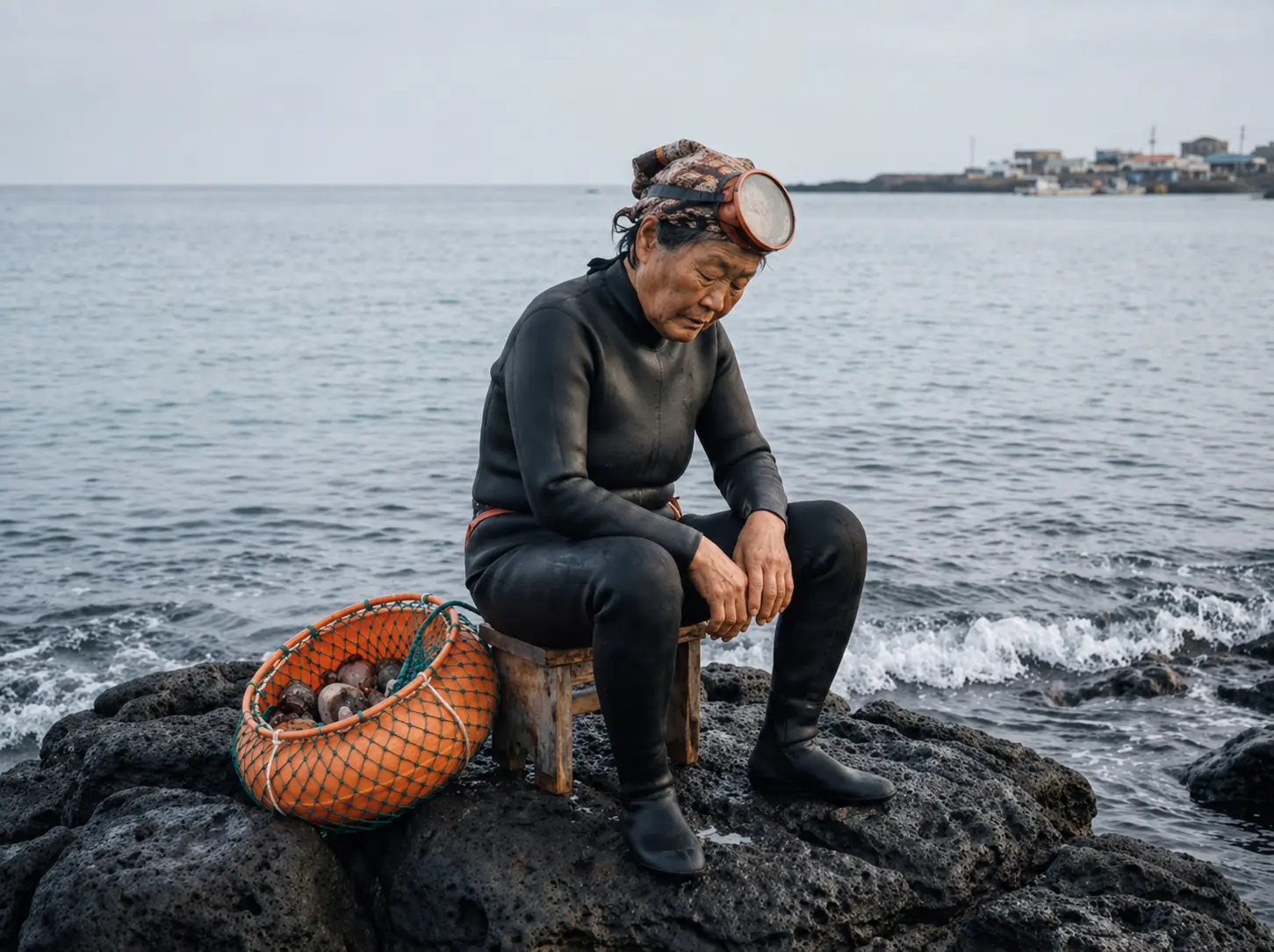
A culture before a phenotype
Park and Kim write about the Haenyeo, the women divers of Jeju whose breath-hold work has been carried through generations. The article is a perspective, not a new experiment. It notes that about 2,623 remained active in 2024 and that more than 90% were over 60, then connects this ageing workforce to broader evidence on cerebral blood-flow regulation, oxygen use, hypoxia-inducible pathways, oxidative stress and possible neural injury in breath-hold divers. It also asks how decades of exposure may intersect with cognition, mood and memory.
What belongs to Haenyeo evidence
The article's most important move is to argue for longitudinal, community-partnered research using neuroimaging, biomarkers and existing health data. Its weakest move is sometimes to let findings from elite freedivers or other hypoxic populations sound Haenyeo-specific. A plausible pathway is not a measured adaptation in this community. Claims about enhanced oxygen efficiency, HIF signalling or biomarkers such as S100B require direct Haenyeo cohorts, appropriate comparison groups and repeated measures before they can carry that label.
The confounders are the life
Ageing, cold exposure, years of physical labour, diet, income insecurity, access to care, social cohesion and selection into or out of diving all shape the observed person. They are not statistical clutter around a pure diving effect; they are part of the phenotype. A survivor cohort may also overrepresent those who tolerated the work. Mental-health findings cannot be detached from economic and social history, while health risks should not be romanticized as the price of resilience. The community must help decide what is measured, how findings are interpreted and what benefits return to participants.
The editorial reading
Haenyeo should not be reduced to a natural laboratory or an exotic image of endurance. They are workers, knowledge holders and older women living inside a changing economy. The article is valuable as a research agenda precisely when its hypotheses remain labelled as hypotheses. The next generation of studies should combine physiology with biography, exposure history and community priorities—and should be designed with, not merely about, the women whose lives generated the questions.
Safety note: This is educational analysis, not individualized medical advice or a maximal-training protocol. In-water practice requires trained safety and current standards.